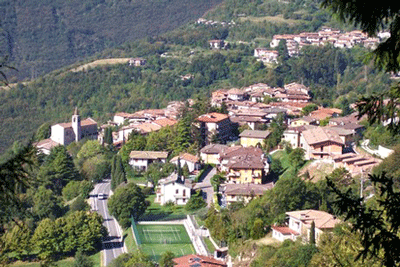
Tignale, the heart of the Alto Garda Bresciano Park and part of the “Riviera dei Limoni“,
is a destination for national and international tourism for landscape and architectural features that characterize it. Its territory includes six districts:
Aer,
Gardola,
Oldesio,
Olzano Piovere,
Prabione, immersed in olive groves and orchards overlooking the lake, in the woods and inland cliffs of the mountain. The synergy between the lake, hills and mountains attracts not only nature lovers and sports enthusiasts, given the wide range of sports on offer, such as sailing, mountain biking, hiking and rafting, but also lovers of good food, in this case rich products and dishes, such as the
spiedo, the
spongadì, organic olive oil and of course lemons from the lemon “
Prà de la Fam“. To welcome the tourists are always cheerful festivals, medieval markets and classical music concerts in the beautiful setting of the villages, the picturesque streets, the old houses and churches, such as the
Sanctuary of Montecastello, also the destination of many pilgrimages having regard to its position overlooking the lake.

TERRITORY OF TIGNALE
Province: Brescia
Hamlets: Aer, Gardola (sede comunale), Oldesio, Olzano Piovere, Prabione
Bordering municipalities: Gargnano,
Magasa,
Tremosine,
Valvestino
Altitude: 555 m s.l.m. –
Population: 1.321 –
Inhabitants name: tignalesiThe municipality of
Tignale is placed on a green plateau on the western shore of Lake Garda and is reached by a winding road that rises from the lake level. In this territory are located numerous caves, seven in the Valley of Vione with meadows of Paul and Mount Siclone, three in the area between cross Fobbia and Mouth Paolone, four in the gorge of the river San Michele, fourteen on the walls overlooking the lake.Strongly characteristic of these places there are strong environmental contrasts, from the lake level to over 1500 meters of the highest mountains, and the varied conditions and landscape situations.
HISTORY OF TIGNALE
Tignale was the center of a Roman pago, a rural center, administrative and religious center in which was inserted the Christian church that included Valvestino and Campione of Tremosine. It belonged to the Benedictine monastery of Leno in the tenth century, after the Chapter of the Cathedral of Brescia, the Bishop of Trento, Scaliger who rebuilt the castle and finally the Visconti. In 1426 Tignale gave the castle to the Republic of Venice in exchange for self-government, and with its statutes became almost independent from the rest of the coast. With the coming of Napoleon followed the fate of the country but those of other countries of the Garda Bresciano absorbed by the province of Brescia, until the outbreak of World War II when it was deleted the border with Austria-Hungary to Magasa and Valvestino.
Until the last century Tignale still lived a situation of substantial isolation from other towns on the coast of Garda, because its economy was based on agricultural activities (fundamental was the cultivation of citrus fruits) that made the country self-sufficient through the exchange of goods and other need to market in Desenzano. It was with the construction of the road Gardesana that the first tourists knew Tignale and use their own resources in the seventies the town recognized in tourism their main vocation.
LOCAL PRODUCTS AND LOCAL CUISINE OF TIGNALE
Spiedo, spongadì, lemons, olive oil ofl Garda